
Why IP Still Matters: A Scooter Story
It seems like they are everywhere, little two wheeled electric scooters. They get referred to as hoverboards, or Segways without sticks. No one really seems to know what to call them, or exactly where they came from, just that they’ve clearly gone viral. Other than providing us with sidewalk hazards and hilarious videos of celebrities, these scooters also offer a clear example of why IP still matters.
The closest anyone has come to tracing the origin of the scooter phenomenon is back to a Chinese company called Chic Robotics, who debuted their product, the Smart S1, at the Canton Fair in August 2014, China’s largest trade show. Chic also holds a series of Chinese patents covering key technologies for the scooter, which they have apparently been completely unable to enforce as their product was reverse engineered and spread virally across the globe.
That is the first IP lesson we can get from these scooters. China is on the rise and they don’t want to be the world’s manufacturer anymore, they want to be the home of the next Apple or Samsung. However, if innovative companies like Chic Robotics are unable to profit from their innovations at home, they will have a very hard time taking on global markets. This should also be a cautionary tale for those advocating weakening the US patent system. It may not be perfect, but it does serve a critical economic function.
If an invention is copied as soon as it is made, the only option for an inventor is to turn to secrecy, an option that is becoming increasingly difficult with today’s high tech reverse engineering processes. However, in a recent op-ed, former USPTO boss David Kappos warned of the risks of a system that returns to secrecy. Kappos reminds readers that not only were patents designed to incentivize innovation, but also to guarantee the disclosure of new ideas, while protecting the inventors profits. With new ideas disclosed via patents, other innovators continue to build on them, without this process the public domain would shrink and progress would slow, inevitably impacting the economy.
After Chic Robotics debuted the Smart S1, it was immediately reverse engineered and copied like wildfire. Now almost identical products are selling in the US under dozens of names from Inventist's Hovertrax to the PhunkeeDuck and IO Hawk. Other brands include Cyboard, Future Foot, Scoot, Overoad, Monorover, iEZWay, Freego, Airwheel, Esway, and the list goes on. Prices range from $200 on Alibaba to $1,800 for a PhunkeeDuck.
Global explosion, with no benefits to Chic Robotics, is the second key lesson to be taken from this story. A well developed IP strategy is critical, from initial patentability and freedom to operate searches to planning for global protection across key markets. While Chic Robotics might not have been able to protect it’s rights in China due to the current IP protection atmosphere, had they planned and applied for appropriate protection in the US they might have been able to license the patents to the dozens of companies now in the market. In that vein Segway just filed a lawsuit against Inventist alleging that the Hovertrax violate Segway's patents.
Despite the attention and criticism currently plaguing the US patent system, stories like this one serve as a strong reminder of why IP protection is still crucial. From startups to major tech and pharma giants, the right to protect and profit from their innovations is a key factor for future success, and a well executed IP strategy is an essential tool for making success a reality.
More insights
Structuring Solar IP Claims for Leverage: How System Claims and Induced or Contributory Infringement Can Expand Enforcement Options
Written by: Tyler S. Cox Key Takeaways: Nextpower’s mix of apparatus and system claims illustrates how claim strategy can expand enforcement flexibility. Additionally, carefully drafting patent claims can expand the scope of protection of the claim…
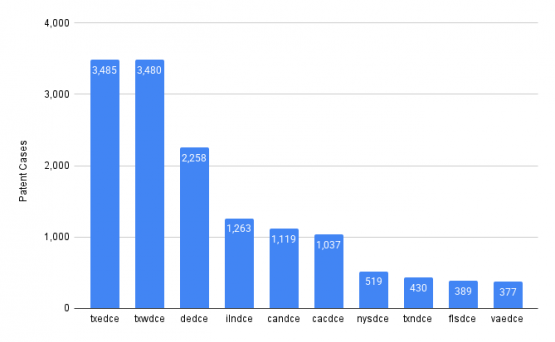
Patexia Insight 256: Patent Litigation Remains Concentrated in Key U.S. District Courts
U.S. District Court patent litigation continues to be one of the most consequential and data-rich arenas in intellectual property enforcement. Between July 1, 2020, and June 30, 2025, 18,352 patent cases were filed across federal courts, involving tens of…

Litigation Finance Tax Dropped From Trump S Big Beautiful Bill
In a major development for the billion dollar litigation finance industry, a tax provision targeting litigation funders has been removed from President Trump’s sweeping tax and spending legislation, dubbed the “Big, Beautiful Bill”,…