
Unconstitutionally Appointed Judges Cannot Decide Ex Parte Appeals
Contributed by Knobbe Martens. Originally published on Patexia; republished here as part of the LexDana archive.
Before Lourie, Dyk, and Reyna. Appeal from the Patent Trial and Appeal Board.
Summary: When administrative patent judges are unconstitutionally appointed, their decisions in ex parte appeals must be vacated.
The PTAB issued decisions in ex parte appeals that affirmed an examiner’s rejection of Boloro Global Limited’s patent applications. Boloro appealed.
On appeal, the PTO Director conceded that administrative patent judges (APJs) were not constitutionally appointed when the PTAB issued its final decisions in the subject ex parte appeals. To determine the proper remedy for this constitutional violation, the Court looked to its decisions in Arthrex, Inc. v. Smith & Nephew, Inc., 941 F.3d 1320 (Fed. Cir. 2019), and VirnetX Inc. v. Cisco Sys., Inc., No. 2019-1671, 2020 WL 2462797 (Fed. Cir. May 13, 2020). In Arthrex and VirnetX, the Federal Circuit held that when APJs are not constitutionally appointed, their decisions in inter partes review and in appeals from inter partes reexamination must be vacated and the matters must be remanded for a new hearing and decision from a different panel of APJs. The Director urged against extending that remedy to ex parte proceedings, arguing that the Director could have ordered that Boloro’s patents be issued but did not, consistent with the PTAB’s subsequent decisions.
The Federal Circuit disagreed with the Director, finding no principled reason to depart from the remedy applied in Arthrex and VirnetX. Thus, the Court vacated the PTAB’s decision and remanded for proceedings consistent with the decision in Arthrex.
Editor: Paul Stewart
Written by: Adam Aquino & Justin J.Gillett
More insights
Space Tech Investment Grows in 2026 Amid Congressional Proposals Affecting Contractual IP Rights
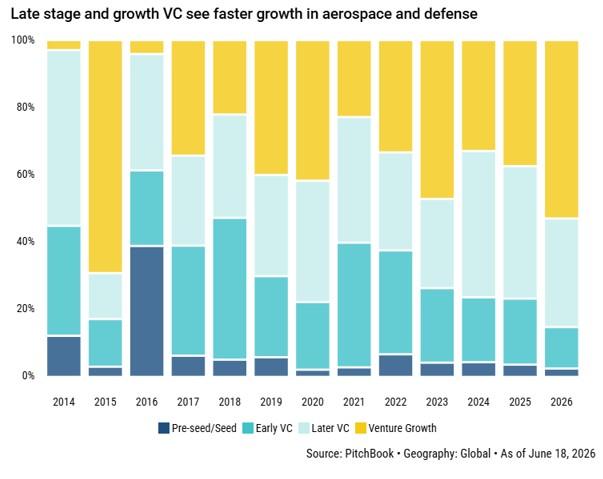
Written by : Tom Cowan Key Takeaways : Private investment in space technology continues an upward trend in 2026, with increasing growth in late stage and venture growth deals, including private equity purchases. Against a backdrop of the “dual…
Amendments to Mexico S Federal Law for Protection of Industrial Property Inform More Flexible International Ip Strategy for Biotech Companies
Written by : J ason J. Jardine and Lizzy T. Do Key Takeaway: Amendments to Mexico’s Federal Law for Protection of Industrial Property align more with U.S. Patent and Trademark Office standards for restoring priority and application revival,…
Public Funding for Energy Innovation Impacts Private Intellectual Property Rights
Written by : Kimberly M. Papadantonakis, Ph.D. Key Takeaway : The value of intellectual property developed using government funds depends upon compliance with disclosure and licensing rules. Public investment is critical to the development and…