
Skechers and Eliya Fight Over Shoe Design Patents Again
Contributed by Knobbe Martens. Originally published on Patexia; republished here as part of the LexDana archive.

Eliya Inc., known for its BERNIE MEV® shoes, filed a declaratory judgment action against Skechers on January 29, 2019 in the U.S. District Court for the Southern District of New York. Skechers had sent a cease and desist letter to Eliya accusing Eliya of infringing on two of Skechers’ shoe design patents, U.S. Pat. No. D821,724 (the “ ‘724 patent”) and U.S. Pat. No. D810,412 (the “ ‘412 patent”):


Eliya’s allegedly infringing shoes:


In response to the letter from Skechers, Eliya filed suit, asking the court for a finding that Eliya’s shoes do not infringe the Skechers patents.


As the side-by-sides show, Eliya’s shoe appears distinct from the ‘412 patent in a number of ways. However, Eliya’s shoe and the ‘724 patent have a similar shape and share a distinctive bow on top of the shoe. Under U.S. law, a design patent is infringed when a copy is “substantially similar.” Egyptian Goddess, Inc. v. Swisa, Inc., 543 F.3d 665, 668 (Fed. Cir. 2008).
To try to avoid being found liable for patent infringement, Eliya is challenging the ‘724 patent itself, claiming that the design is not patent eligible.
Design patents must be both novel and non-obvious under Sections 101 and 102 of the patent law, respectively, in order to be patent eligible. These two standards also apply to utility patents. But unlike utility patents, which protect functional elements of inventions or processes, design patents protect only the ornamental designs of functional items.
In Eliya’s complaint, Eliya provides two arguments why Skechers’ ‘724 patent should be invalidated:
- Eliya argues that the bow design in the ‘724 patent is functional. For instance, if the shoe can be tightened or loosened around the foot by tightening or loosening the bow, then the bow is performing a functional task. This function could arguably make it ineligible for design patent protection.
- Eliya also argues that the bow design in the ‘724 patent was not novel. Skechers’ patent application was filed on February 13, 2018. But in September of 2015, more than two years earlier, PUMA® began selling a shoe with a bow design. Eliya argues because PUMA’s bow design was used on shoes sold before Skechers filed its application, the bow design is not novel and is thus not patentable.
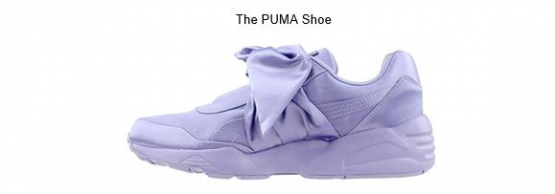

Filing the complaint is the first step of what can be a long litigation journey, and these parties may have many miles to run before they reach the finish line.
This is not the first time Eliya and Skechers have gone to war over Skechers’ shoe patents. In 2016, Skechers sued Eliya in the U.S. District Court for the Central District of California, accusing Eliya’s “Gummies” shoes of infringing Skechers’ shoe patents that are the basis for Skechers’ SKECH-AIR® shoe line. That case settled in 2017.


In the present case, Eliya was first off the mark. It challenged Skechers’ patents before it got sued for infringement.
Editor: Catherine Holland
Written by: Brian M.Z. Reece & Jeff Van Hoosear
More insights
Not All Mifflins Are Equal: When Commercial Impression Saves the Day
Written by : Rosaleen Chou Key Takeaway: Even where goods are identical or closely related, the TTAB continues to place significant weight on differences in commercial impression. A mark’s meaning, whether driven by pop culture context or literal…
Sound Marks They Are More Than Just Alright Alright Alright 20260629
Written by : Charlene A. Azema & Alexander G. Trimes Key Takeaway: Non-traditional trademarks like sound marks can provide valuable protection for distinctive sounds that function as source identifiers, particularly where other forms of intellectual…
Should Have Written a Better Consent and How Ey
Written by : Catherine Holland & Eric R. Blosser Key Takeaway: The Trademark Trial and Appeal Board (“ TTAB ” or “the Board”) afforded no weight to a bare-bones trademark consent agreement that contained no provisions for the…