
Ranbaxy and Astrazeneca Prevail in Nexium Pay for Delay Case
Contributed by Knobbe Martens. Originally published on Patexia; republished here as part of the LexDana archive.
Written by Eric S. Furman, Ph.D. and Caleb A. Bates, Ph.D.
On November 21, 2016, the U.S. Court of Appeals for the First Circuit upheld a 2014 jury verdict for AstraZeneca (AZ) and Ranbaxy regarding a 2012 payment of $700 million from AstraZeneca for Ranbaxy to abandon its challenge to patents covering Nexium®. Importantly, this case was the first pharmaceutical antitrust case tried before a jury after the Supreme Court’s landmark decision in U.S. Federal Trade Communication v. Actavis, 133 S.Ct. 2223 (2013), which addressed pay-for-delay or “reverse payment” pharmaceutical litigation settlements. Opponents to pay-for-delay settlements argue that they stifle competition from lower-cost generic medicines by settling litigation with payments so as to delay market entry of the generic medicine.
In 2005, AZ sued Ranbaxy under the Hatch-Waxman Act regarding Ranbaxy’s proposed generic Nexium® product. In 2008, the parties reached a settlement, including manufacturing and distribution agreements, and exclusive marketing privileges of an estimated worth of over $700 million. The present class action suit was filed in 2012, alleging that the settlement agreement violated federal antitrust laws. During this litigation, the Supreme Court decided FTC v. Actavis in a 5-3 split decision, in which, the Court concluded that reverse-payment settlements can violate antitrust laws, but that each case must be considered individually under the common “rule-of-reason standard.” See Actavis at 2237. The Court also noted that “large and unjustified” payments are unacceptable.
When this case went to trial, the jury ultimately found that while AZ’s payment to Ranbaxy was “large and unjustified,” the plaintiffs had not shown that they were harmed by the settlement. Specifically, no generic medicine was ready to enter the market at the time of the settlement, thus, the settlement did not prevent earlier generic entry and did not cause harm to the Plaintiffs. The District Court then denied Plaintiffs’ request for a new trial and Plaintiffs appealed on four grounds, one of which was that the District Court impermissibly decreased the number of theories of injury that Plaintiffs were allowed to present to the jury. The appellate panel upheld the District Court, finding, inter alia, that the jury verdict rendered harmless any error that may have occurred during the summary judgment proceedings.
Importantly, at the time of the reverse-payment, Ranbaxy did not have a generic medicine ready to go to market, and there was insufficient evidence to find that Ranbaxy could have obtained FDA approval at an earlier date. Thus, Defendants successfully argued that, at the time the agreements were made, no generic manufacturer was positioned to enter the market with a generic Nexium® with regard to either marketing capacity or regulatory approval. Accordingly, the timing of the settlement with respect to the generic manufacturers’ progress in developing the generic product may become a key factor in the permissibility of such reverse payments.
More insights
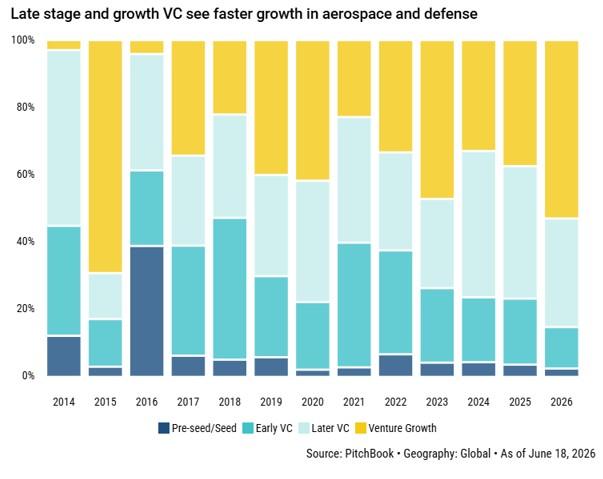
Space Tech Investment Grows in 2026 Amid Congressional Proposals Affecting Contractual IP Rights
Written by : Tom Cowan Key Takeaways : Private investment in space technology continues an upward trend in 2026, with increasing growth in late stage and venture growth deals, including private equity purchases. Against a backdrop of the “dual…
Amendments to Mexico S Federal Law for Protection of Industrial Property Inform More Flexible International Ip Strategy for Biotech Companies
Written by : J ason J. Jardine and Lizzy T. Do Key Takeaway: Amendments to Mexico’s Federal Law for Protection of Industrial Property align more with U.S. Patent and Trademark Office standards for restoring priority and application revival,…
Public Funding for Energy Innovation Impacts Private Intellectual Property Rights
Written by : Kimberly M. Papadantonakis, Ph.D. Key Takeaway : The value of intellectual property developed using government funds depends upon compliance with disclosure and licensing rules. Public investment is critical to the development and…