
New Edition of C.I.P.A. Guide to Patent Acts Published
Contributed by Schwegman Lundberg & Woessner. Originally published on Patexia; republished here as part of the LexDana archive.
This “Guide” is a 1528 page book published by the Chartered Institute of Patent Attorneys via Thomson Reuters, and edited by Paul Cole and Richard Davis. Of course, it mostly focused on UK patent law, but draws upon a variety of sources, including decisions of the Boards of Appeal of the EPO, other EP contracting state and “even the USA.” This is the 9th Edition that is referred to by practitioners as the “Black Book.”
I can’t attempt to review this tome, but it comes with a 268 page index that comprises more than 120 Sections. The index is very well-organized. Of course, I turned first to Section 4A – “Methods of Treatment or Diagnosis” and then to Section 4A.07 – “The meaning of diagnosis”. This is taken from that Section:
“As indicated above, the position in the US differs significantly from that in the UK or before the EPO, and claims specifying methods of diagnosis without downstream patient treatment features are unlikely to be held valid.”
This section goes on to compare 8 U.S. decisions, such as Myriad, Meriel, Cleveland Clinic and Athena with the outcomes in Australia, Canada and, of course, the EPO. It is worth reading, or magnifying then reading, the fine print in this section. (The Guide was published just prior to the Supreme Court’s denial of cert. in Athena.) I also got drawn into “Patents for the first medical indication” (A4.08), at least until my eyes got worn out, but it was difficult to resist Sections like “The meaning of ‘therapy’” or “The meaning of ‘surgery’”. There is also a new Section76A – “Biotechnological inventions”.
This Guide should be on every attorney’s desk. Although you may never need to reference many of the Sections, the Guide will help you to second-guess your European associates as well as to help you to answer otherwise potentially embarrassing questions about the case law and Rules of the UK/EP, asked by your associates or your clients. I did not find a notice that the Guide can be obtained for online use, but that would be a good idea. Perhaps one of the 28 editors could answer this question.
This article was originally published on Patents4Life.com.
Patents4Life is sponsored by Schwegman Lundberg & Woessner, P.A
More insights
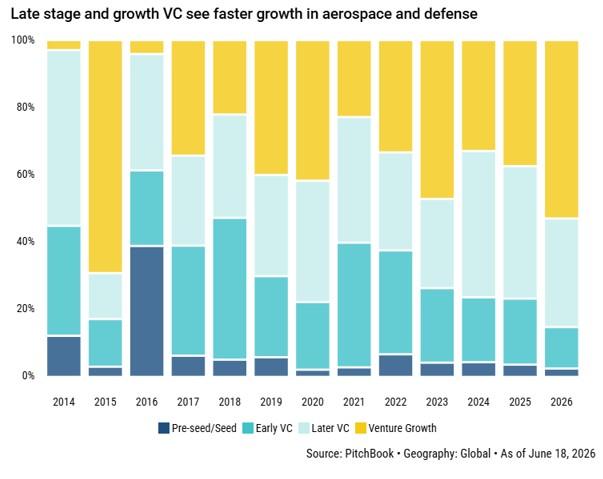
Space Tech Investment Grows in 2026 Amid Congressional Proposals Affecting Contractual IP Rights
Written by : Tom Cowan Key Takeaways : Private investment in space technology continues an upward trend in 2026, with increasing growth in late stage and venture growth deals, including private equity purchases. Against a backdrop of the “dual…
Amendments to Mexico S Federal Law for Protection of Industrial Property Inform More Flexible International Ip Strategy for Biotech Companies
Written by : J ason J. Jardine and Lizzy T. Do Key Takeaway: Amendments to Mexico’s Federal Law for Protection of Industrial Property align more with U.S. Patent and Trademark Office standards for restoring priority and application revival,…
Public Funding for Energy Innovation Impacts Private Intellectual Property Rights
Written by : Kimberly M. Papadantonakis, Ph.D. Key Takeaway : The value of intellectual property developed using government funds depends upon compliance with disclosure and licensing rules. Public investment is critical to the development and…