
Medical Device Patentee Petitions Supreme Court Regarding On-Sale Bar and Price Quotes
Contributed by Knobbe Martens. Originally published on Patexia; republished here as part of the LexDana archive.
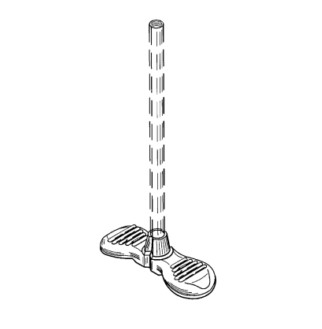
A medical device patentee has asked the U.S. Supreme Court to save his design patent, related to an introducer sheath handle, from invalidity based on application of the “on-sale” bar, which prohibits patenting an invention if it has been for sale for over one year prior to the patent filing.
On July 6, 2022, in Junker v. Medical Components Inc., inventor Larry Junker filed a petition for certiorari asking the Supreme Court to review the Federal Circuit’s finding of invalidity of his design patent under the on-sale bar. Mr. Junker alleged that Medical Components, Inc. and Martech Medical Products, Inc. (collectively “MedComp”) infringed U.S. Design Patent No. D450,839 (the “D’839 patent”), entitled “Handle for Introducer Sheath.” An introducer sheath is a device used to place catheters. The D’839 patent covered the design of the introducer sheath’s handle with rounded “Mickey-Mouse-shaped ears” that made the device easier to grasp when inserting the catheter and when peeling apart and removing the sheath. Figure 1 from the D’389 patent is reproduced below:
Mr. Junker and MedComp filed cross-motions for summary judgment debating whether the D’839 patent was invalid under the “on-sale bar” of 35 U.S.C. § 102(b) (pre-AIA). Under 35 U.S.C. § 102(b) (pre-AIA), a patent claim is invalid if “the invention was . . . on sale in this country, more than one year prior to the date of the application for patent in the United States.” The parties disputed whether a 1999 letter regarding a price quotation, sent more than one year before the D’839 patent was filed, constituted a commercial offer for sale. The letter was sent by a third party manufacturer to Boston Scientific.
The district court concluded that the letter was not a commercial offer for sale and accordingly granted Mr. Junker’s motion for summary judgment of no invalidity. After a bench trial, the court awarded Mr. Junker $1.25 million in damages. On appeal, the U.S. Court of Appeals for the Federal Circuit disagreed, finding that the letter contained sufficient terms to constitute a commercial offer for sale rather than a mere quotation.
In his petition for certiorari, Mr. Junker urges the Supreme Court to review the Federal Circuit’s ruling, arguing that the Federal Circuit misapplied contract law because the 1999 letter was sent by a third party who had no right to sell the invention, and the letter expressly stated it was a quotation rather than a price list.
Mr. Junker’s petition for certiorari is available here.
Written by: Steven N. Friedland
More insights
Skinny Labels at the Supreme Court: Carving Out Room for Generics to Breathe
Written by : Ari Feinstein and Zoe E. Vikstrom HIKMA PHARMACEUTICALS USA INC. et al. v. AMARIN PHARMA, INC., et al. Jackson, J., delivered the opinion for a unanimous Court. Certiorari to the United States Court of Appeals for the Federal Circuit. Summary:…
U.S. Supreme Court Declines to Hear Patent Appeal Against Apple, Google, and LG
In a closely watched dispute that sits at the intersection of patent validity, administrative review, and high-stakes smartphone litigation, the U.S. Supreme Court on November 17, 2025, declined to hear an appeal brought by Gesture Technology Partners…
3-2-1 Blast Off: US Space Force Trademark Dispute Aims for the Supreme Court
Written by : Ian W. Gillies The trademark attorney Thomas D. Foster has found himself in ongoing legal star wars to register US SPACE FORCE as his personal trademark covering coins, jewelry, watches, license plate holders, toys, and other everyday goods.…