
Infringement Judgement Is Only Final When There S Nothing Left to Do but Execute
Contributed by Knobbe Martens. Originally published on Patexia; republished here as part of the LexDana archive.
Written by: Tyler S. Cox & Karen Cassidy Selvaggio
PACKET INTELLIGENCE LLC v. NETSCOUT SYSTEMS, INC.
Before Lourie, Hughes, and Stark. Appeal from the U.S. District Court for the Eastern District of Texas.
Summary: An infringement judgment is only sufficiently “final” to be immune from a later finding of unpatentability if the litigation has moved to a stage that leaves nothing for the court to do but execute the judgment.
This case was before the Federal Circuit for the second time. Packet sued NetScout in the Eastern District of Texas for infringing various patents. Previously, the district court found that NetScout willfully infringed and that no asserted claim was unpatentable or invalid, and granted pre- and post-suit damages, enhanced damages, and an ongoing royalty for future infringement. In the first appeal, the Federal Circuit affirmed the district court’s infringement and validity determination but reversed the award of some of the monetary damages, remanding the case back to the district court to reconsider damages. During the pendency of the remand, the Patent Trial and Appeal Board issued final written decisions in several 3rd-party IPRs that found all of the claims asserted by Packet against NetScout unpatentable. Packet appealed the Board’s decision. Following issuance of the final written decisions, NetScout moved to dismiss Packet’s infringement case, or in the alternative stay the case pending resolution of Packet’s appeal. The district court denied the motion to dismiss or stay and entered an amended final judgment regarding the litigated issues on remand from the first appeal. NetScout appealed.
After NetScout appealed, the Federal Circuit affirmed the Board’s final written decision of unpatentability in the 3rd-party IPRs. On appeal, the same 3-judge panel determined that Packet’s patent infringement was moot because Packet’s infringement judgment was not sufficiently final to be immune from the unpatentability affirmation. The Federal Circuit explained that an infringement judgment is only sufficiently “final” to be immune from a later finding of unpatentability if the litigation has moved to a stage that leaves nothing for the court to do but execute the judgment. Packet’s infringement judgment was not sufficiently “final” after the Federal Circuit initially affirmed the infringement judgment because the district court had to reconsider the awarded damages on remand, which is more than “nothing … but execute the judgment.” Packet’s infringement judgment was also not sufficiently “final” after the district court issued the amended judgment because NetScout’s appeal was non-frivolous.
Editor: Sean Murray
More insights
Structuring Solar IP Claims for Leverage: How System Claims and Induced or Contributory Infringement Can Expand Enforcement Options
Written by: Tyler S. Cox Key Takeaways: Nextpower’s mix of apparatus and system claims illustrates how claim strategy can expand enforcement flexibility. Additionally, carefully drafting patent claims can expand the scope of protection of the claim…
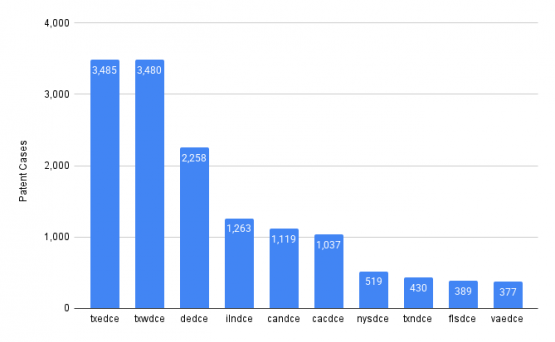
Patexia Insight 256: Patent Litigation Remains Concentrated in Key U.S. District Courts
U.S. District Court patent litigation continues to be one of the most consequential and data-rich arenas in intellectual property enforcement. Between July 1, 2020, and June 30, 2025, 18,352 patent cases were filed across federal courts, involving tens of…

Litigation Finance Tax Dropped From Trump S Big Beautiful Bill
In a major development for the billion dollar litigation finance industry, a tax provision targeting litigation funders has been removed from President Trump’s sweeping tax and spending legislation, dubbed the “Big, Beautiful Bill”,…