
Hulu v Soundview Innovations the Shifting Sands of Printed Publications
Contributed by Schwegman Lundberg & Woessner. Originally published on Patexia; republished here as part of the LexDana archive.
In Hulu v Soundview Innovations, IPR2018-01039, the PTAB was faced with the question of whether or not a certain textbook was a “printed publication” that was “publicly available” and so qualified as prior art against U.S. Pat. No. 5,806,062 – Patent Owner, Soundview. At the institution phase of the IPR, the Board had found that the textbook (“Dougherty”) had not been adequately shown to be “publicly accessible” enough to qualify as prior art. Because prior Board decisions were in conflict on this issue, a Precedential Opinion Panel (“POP”) review was granted.
The Board granted Petitioner’s request for rehearing and held that, based on the totality of the evidence currently on record, Petitioner has submitted evidence sufficient to establish a reasonable likelihood that the Dougherty reference was publicly accessible before the critical date of the challenged patent, “and thus Petitioner has established a reasonable likelihood that the reference qualifies as a printed publication.”
That application of IPR rules to s. 102(a)(1) or 102(b) could create some interesting outcomes since, at trial, Petitioner “will ultimately have the burden to prove that the reference is a printed publication by a preponderance of the evidence”. This will probably not be too difficult for Petitioner in this case, even though they lost at the institution phase, since Dougherty is an actual book. No difficulty in finding that it was “printed”, and evidence of public accessibility of a book with paper pages and a cover, published by a reputable press, that has an ISBN, and a library received stamp is going to meet the “public accessibility” standard. Petitioner had also obtained two affidavits from university librarians. The fact that there were multiple editions of the book muddied the water a bit, but that fact turned out not to be dispositive.
This opinion contains a compact summary of both the early stages of IPR institution and the well-recognized standards for what is, or isn’t, a prior art printed publication. Here, despite the early reference to conflicting PTAB decisions, the Board cited nothing but CCPA and Fed. Cir. caselaw in its section on the law of “public accessibility”, which it called the touchstone in determining whether a reference constitutes a printed publication bar under 102(b). In other words, it is clear that Petitioner will be able to establish that this textbook qualifies as a printed publication under either standard of proof.
But despite labelling this as a POP review, printed publication rulings have always been fact-driven, and disparate decisions are common in the age of internet publication and sales, particularly if the book is self-published. What if it is listed on Amazon as forthcoming but not yet available? Will Amazon be willing to supply information about when it listed as available, or when it first sold physical or Kindle copies? After all, for many smaller presses, Amazon is their only distributor. What if Amazon offers the book for sale, but only individuals buy it for the first six months, and library sales do not occur until after the critical date. Will Amazon tell Petitioner who bought the book? How easy will it be for Petitioner to meet the “reasonable likelihood” threshold? My only take-away is to fight like a wounded wolverine if there is any weakness in your opponent’s evidence of either “printed” or “published.”
This article was originally published on Patents4Life.com.
Patents4Life is sponsored by Schwegman Lundberg & Woessner, P.A
More insights
Space Tech Investment Grows in 2026 Amid Congressional Proposals Affecting Contractual IP Rights
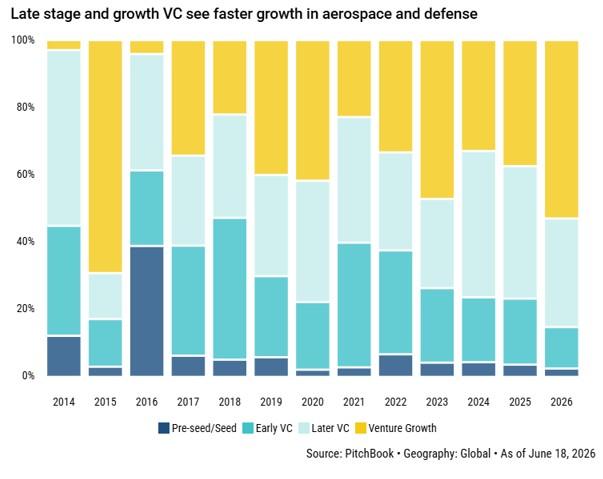
Written by : Tom Cowan Key Takeaways : Private investment in space technology continues an upward trend in 2026, with increasing growth in late stage and venture growth deals, including private equity purchases. Against a backdrop of the “dual…
Amendments to Mexico S Federal Law for Protection of Industrial Property Inform More Flexible International Ip Strategy for Biotech Companies
Written by : J ason J. Jardine and Lizzy T. Do Key Takeaway: Amendments to Mexico’s Federal Law for Protection of Industrial Property align more with U.S. Patent and Trademark Office standards for restoring priority and application revival,…
Public Funding for Energy Innovation Impacts Private Intellectual Property Rights
Written by : Kimberly M. Papadantonakis, Ph.D. Key Takeaway : The value of intellectual property developed using government funds depends upon compliance with disclosure and licensing rules. Public investment is critical to the development and…