
Furthering Industry Consolidation Archer Aviation Is Acquiring Lilium S Patent Portfolio
Contributed by Knobbe Martens. Originally published on Patexia; republished here as part of the LexDana archive.

Written by: Wentao Wu
Competition in the Advanced Air Mobility (AAM) industry has been fierce and has led to recent consolidation. Some of the remaining companies include Joby Aviation, Wisk Aero, Wanfeng, and Archer Aviation.
On October 15, 2025, Archer Aviation Inc. (Archer) announced that it had won the competitive bid process to acquire the patent portfolio of Lilium GmbH (Lilium) of around 300 advanced air mobility (AAM) patent assets for €18 million (about $21 million).
Archer, an aerospace company based in San Jose, CA, designs and develops electric vertical takeoff and landing (eVTOL) aircraft for regional air mobility (RAM) or urban air mobility (UAM). Lilium, a German aerospace company, was also a key player in eVTOL but filed for insolvency early this year. The eVTOL aircraft is a vertical take-off and landing (VTOL) aircraft that uses electric power. According to Archer, the newly acquired patents cover current and next-generation eVTOL technologies, such as ducted fan systems, high-voltage architectures, battery management, and flight control systems. This acquisition “bolsters Archer’s rapidly growing patent portfolio” and “Archer’s portfolio now includes over 1,000 patent assets worldwide.” According to its press release, Archer believes it has “the leading patent portfolio on ducted fan technology in the world.” Archer believes this technology “could unlock future development in both the light-sport and regional air mobility sectors.” 
Archer’s press release also mentions the modernization of the special airworthiness certification (MOSAIC) final rule recently issued by the U.S. Department of Transportation and Federal Aviation Administration (FAA) to drive innovation in light-sport aircraft (LSA).
Archer’s press release is available here.
Archer’s acquisition demonstrates the ongoing consolidation within the AAM industry and reflects the fierce competition in this sector. In August, Joby Aviation, another company focusing on eVTOL, acquired Blade Air Mobility’s passenger business to accelerate the air taxi commercialization. In June, Wisk Aero, Boeing’s autonomous air taxi subsidiary, acquired SkyGrid, an AAM third-party service provider also backed by Boeing. In March, another German electric air taxi startup Volocopter was acquired also out of insolvency by China’s Wanfeng Auto Holding Group.
Startups like Lilium, which invested heavily in research and development, may create opportunities for well-capitalized companies to acquire them or absorb their intellectual assets when financial challenges arise. This trend reflects a shift from a fragmented startup ecosystem toward a smaller group of dominant players. As the industry moves closer to the scaled operations, such consolidation will likely continue.
More insights
Space Tech Investment Grows in 2026 Amid Congressional Proposals Affecting Contractual IP Rights
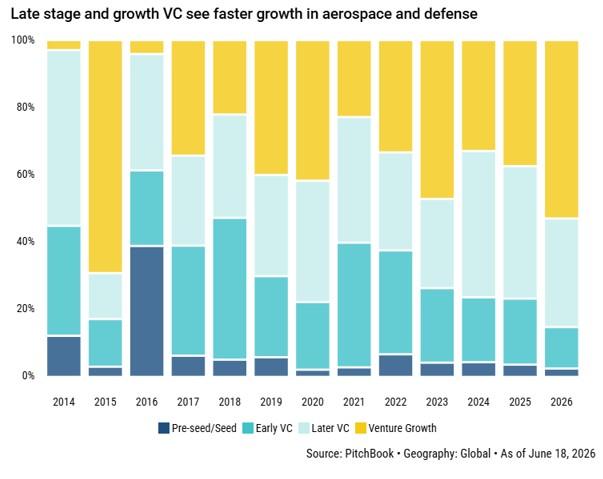
Written by : Tom Cowan Key Takeaways : Private investment in space technology continues an upward trend in 2026, with increasing growth in late stage and venture growth deals, including private equity purchases. Against a backdrop of the “dual…
Amendments to Mexico S Federal Law for Protection of Industrial Property Inform More Flexible International Ip Strategy for Biotech Companies
Written by : J ason J. Jardine and Lizzy T. Do Key Takeaway: Amendments to Mexico’s Federal Law for Protection of Industrial Property align more with U.S. Patent and Trademark Office standards for restoring priority and application revival,…
Public Funding for Energy Innovation Impacts Private Intellectual Property Rights
Written by : Kimberly M. Papadantonakis, Ph.D. Key Takeaway : The value of intellectual property developed using government funds depends upon compliance with disclosure and licensing rules. Public investment is critical to the development and…